
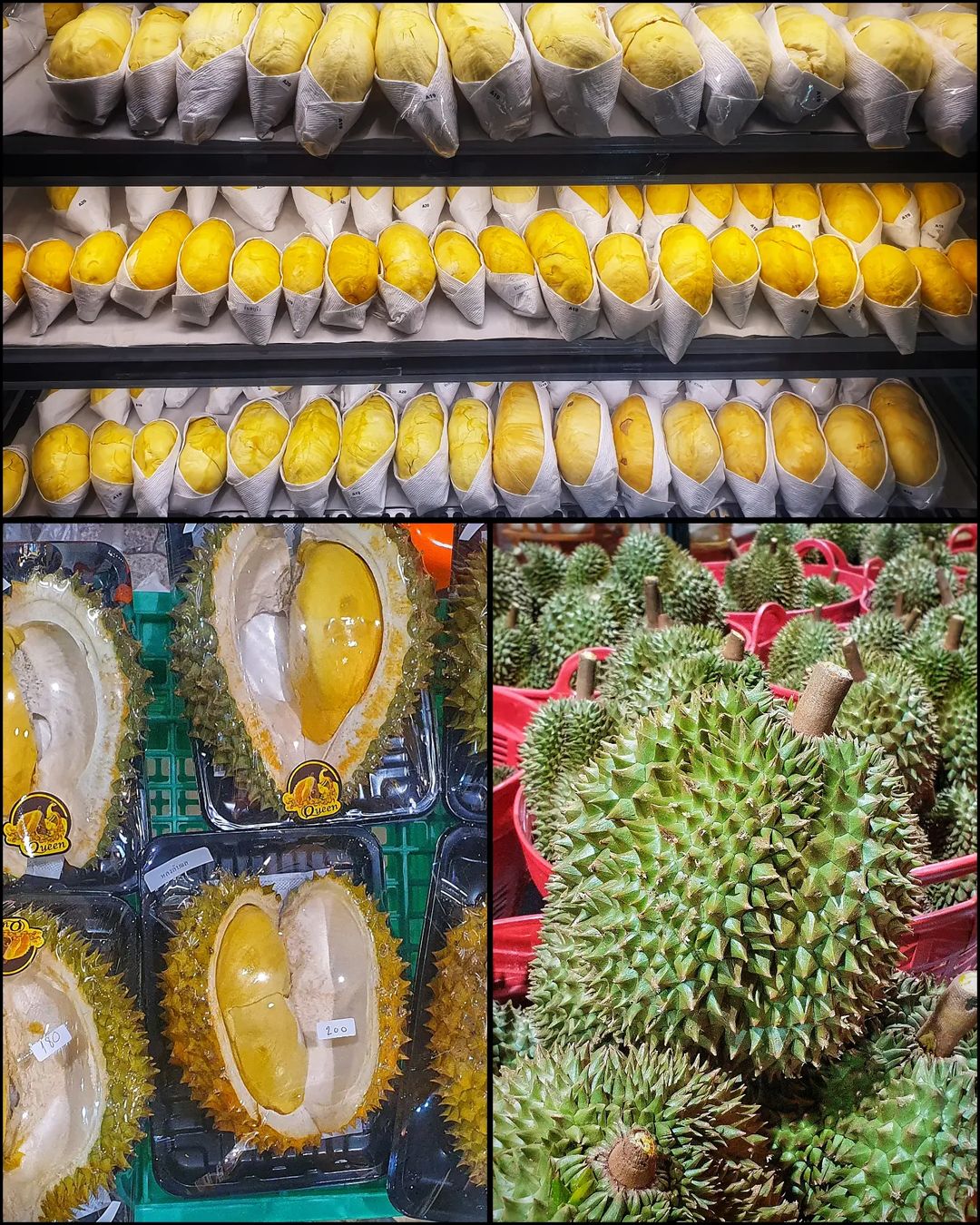
Southeast Asia. You walk the streets through the smoke of something sizzling on a BBQ, the scent of spices and freshly cut fruit, and the sound of a city that never stops breathing. Then it hits you—a sensory assault that overpowers everything else: the durian! This thorny devil allows no indifference: you either draw closer in curiosity or quicken your pace. A constant presence in these parts, no one seems to pay it much mind. Except for you, the first time you realize it exists.
If you haven’t encountered it yet, the durian is a massive tropical fruit, armored in spines, ranging in size from an apple to a large watermelon. At first glance, it might seem like just another piece of exoticism on a market stall, but it’s not the irregular rind that sparks debate. It’s the dense, penetrating aroma released when it’s sliced open—a scent that fills the air and forces everyone to take a personal stand.
Someone takes a knife, carves into the thick husk, and underneath emerges a yellow pulp, soft, almost indecent in its creaminess. The texture vaguely recalls a custard; some speak of butter, but every attempt to label it lasts only a few seconds. Many wrinkle their noses as the scent grows more intense. But the first bite erases every doubt, leaving you only with that sensation of soft fullness, impossible to categorise.
The flavour is what truly sets it apart. It starts sweet, but it doesn’t stop there. Beneath the sweetness lies a deeper note, faintly reminiscent of almond, a hint of vanilla, and then something more savory that lingers at the back, changing everything. It’s one of those tastes that cannot be summarised with a simple comparison, yet remains impossible to forget.
It is not a fruit for everyone. And frankly, the durian doesn’t care for your approval. Some taste it once and run, and those who never stop searching for it among the exotic stalls. Personally, I’ve never found its smell so unbearable. It’s intense, certainly, but it didn’t make me back away: some of our cheeses can be far more aggressive. The flavour, then, hooked me immediately: sweet, yes, but layered, strangely enveloping, creamy, with something profound that remains etched in the palate’s memory.
The real test comes later. That slow weight that gives your digestion a run for its money, reminding you for hours that you chose something dense and uncompromising. Whether you are tasting it fresh, plucked from beneath a tree in Southeast Asia, or find it transformed into an elegant dessert on the other side of the world, this fruit is a captivating culinary journey that makes no compromises—an experience that deserves to be lived without prejudice. The durian is relentless.
Durian is a tropical fruit commonly found in Southeast Asia, known for its strong aroma and intense flavour. It is said to have a cheese-like taste with a pungent and persistent scent that can be smelled from several meters away.
Durian has a thick and spiky shell that makes it difficult to open without the right tools. However, once opened, you can enjoy the creamy and soft pulp inside, which is often used in the preparation of sweets, desserts, and beverages.
In many Southeast Asian countries, durian is considered a delicacy and a symbol of social status. In Thailand, for example, durian is so highly regarded that it is often called “the king of fruits”. In Malaysia and Singapore, durian is so beloved that many restaurants and street vendors serve it fresh or in desserts all year round.
However, durian also has some detractors due to its strong aroma, which can be off-putting for some people. Additionally, the fruit has a highly calorific pulp, which means that it should be consumed in moderation.
If you travel to various countries where it is grown, you will often find signs in subways, elevators of some buildings, taxis, hotels, and many other places that prohibit the introduction of such fruit, which for some is unbearable…!
Overall, despite its reputation, durian is an exotic and fascinating fruit worth trying if you have the opportunity to visit Southeast Asia.