


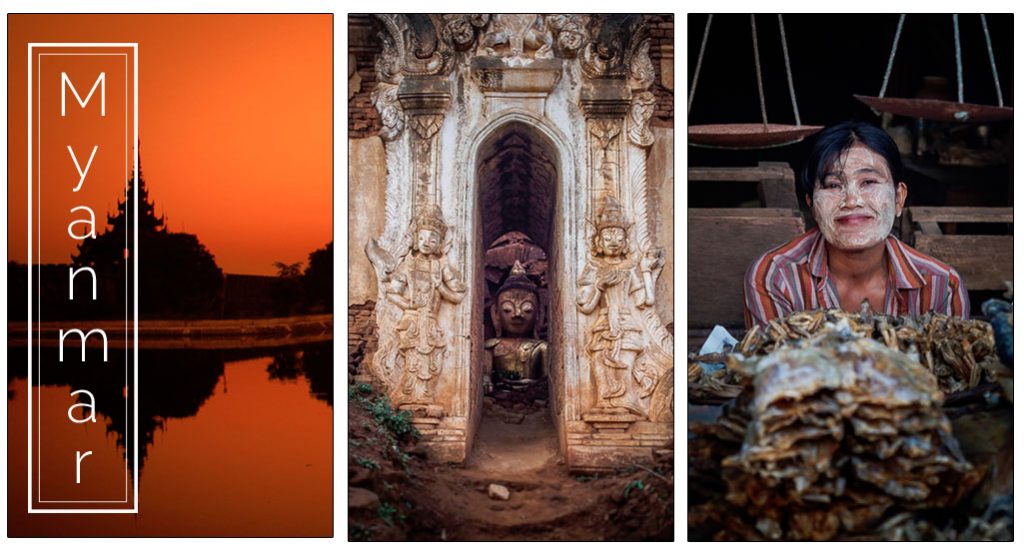
…through culture, history, food and everyday life, drawn from years of living, travelling, and experiencing this corner of Asia since 2010.
The stolen smile of Burma
Myanmar, still called by many by its old name Burma, is one of those places that, once crossed, stays inside you and never lets you go. Anyone who sets foot there often leaves with the feeling of having touched something rare.
The first time I arrived, I didn’t really know what to expect. I hadn’t studied the country much before leaving, and to be honest, I always prefer it that way. Too much preparation risks turning the trip into a checklist. I prefer to leave room for the concrete reality rather than expectations. After so many years traveling around Asia, I stopped feeling like a mere tourist.
Those were different years than today. There wasn’t a real ATM network in the country yet. You traveled with perfect dollars, without creases, without marks, because a tiny flaw was enough to have them rejected by the money changers. ATMs appeared only later, initially almost exclusively in airports and a few cities. Getting around the Myanmar of that time had something more uncertain, more difficult, and perhaps precisely for this reason, more authentic.
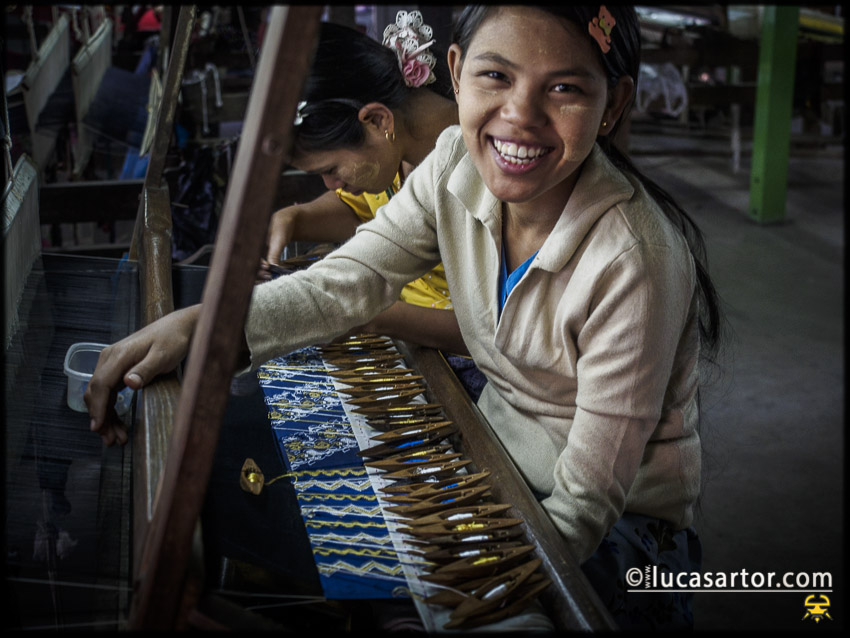
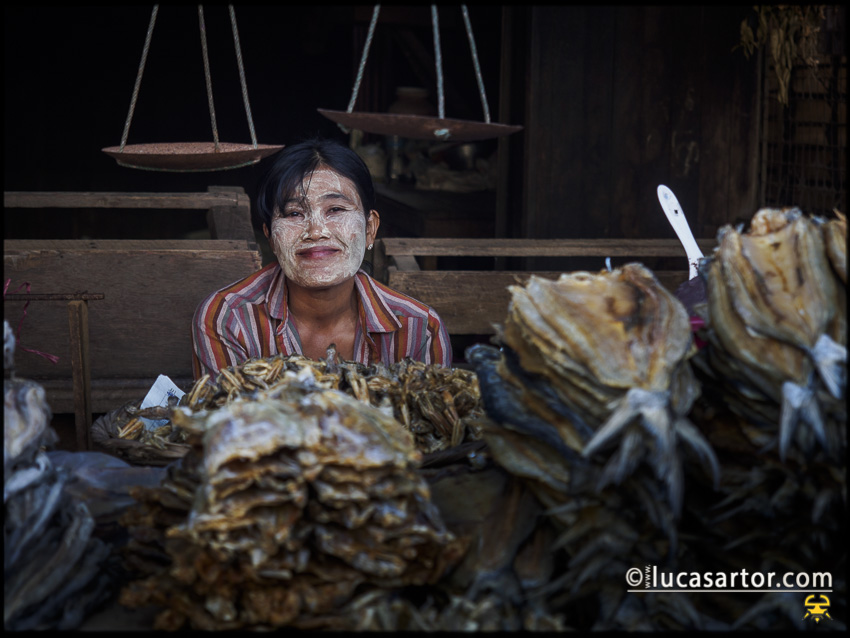
What struck me immediately were the smiles. Not the circumstantial ones you meet in many tourist places, but full, bright, almost disarming smiles. Probably the purest I have ever seen in my travels.
Encounters along the way
In Bagan, I remember a young girl wandering among the temples selling small souvenirs to visitors. Those gadgets that travelers normally buy without thinking too much about it. She, instead, stopped to talk. Curious, direct, with that energy typical of children who grow up on the street, among travelers, and quickly learn to read the world. I don’t even remember exactly what she was selling, but I remember her smile and her lively big eyes as she tried to tell me something about her life among the pagodas and the dust of the plain.
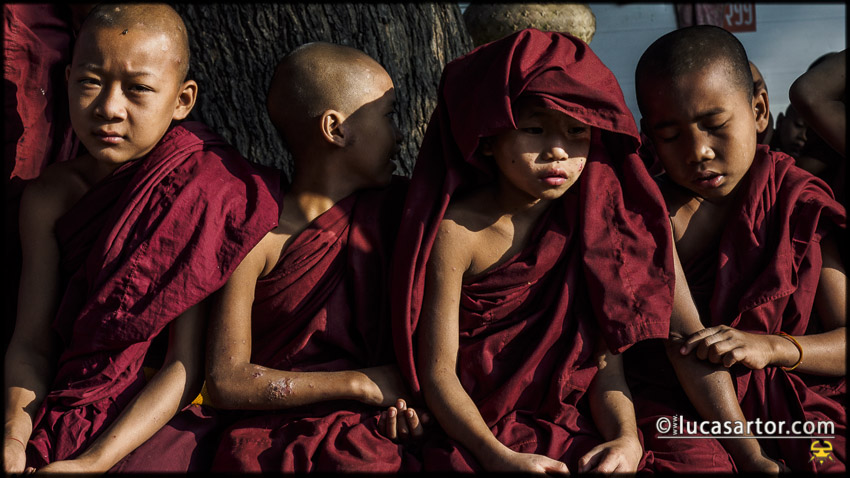
Another time, a young monk invited me to visit the monastery where he lived. He wasn’t organizing a tour; he was simply curious to practice a little English. We walked through silent teak corridors, bamboo mats, and small spartan rooms where the monks spent their days studying and meditating. He spoke softly, with a natural kindness, while outside the sun fell on the golden roofs of the pagodas.
Then there are the images that remain imprinted almost without reason. A father holding his little girl tight, enthusiastically agreeing to have their picture taken. She laughs, he strikes a pose with a smile full of pride, with that simple and powerful expression of someone looking at his daughter as if she were the most beautiful thing ever created in the world.
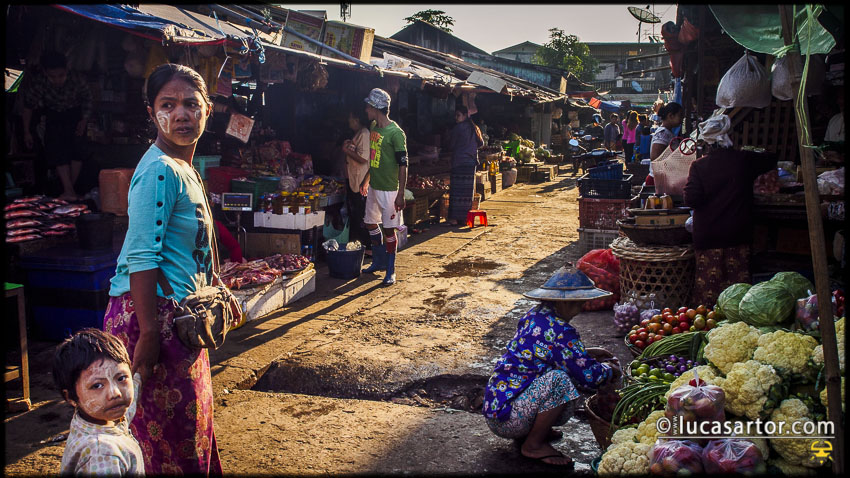
And everywhere, on people’s faces, that yellowish thanaka powder spread on their cheeks and foreheads. An ancient tradition, used as protection from the sun, which has now become one of the most recognizable symbols of the country. On the smiling faces of children and women, it takes on almost decorative shapes: circles, leaves, stripes painted with a natural elegance.
Long, endless journeys
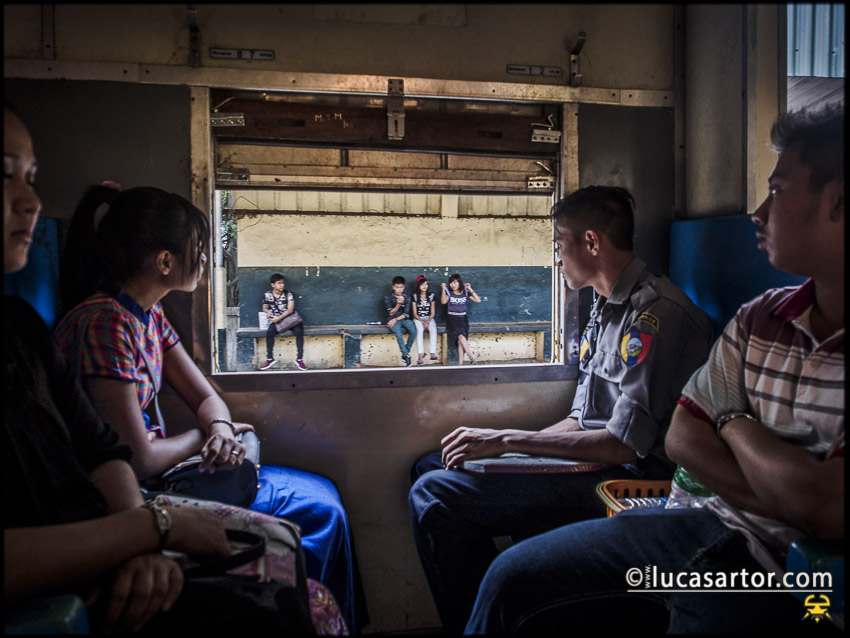
Traveling in Myanmar also means accepting a certain amount of fatigue. I remember a long train journey from Yangon to the south of the country. Endless hours in a carriage that felt more like an amusement park ride than a means of transport.
The train constantly jolted on the tracks, bouncing so much that sometimes you almost ended up lifted off your seat. After a few hours, your back would seriously start to protest. Yet no one seemed to pay much attention to it. Vendors would board at the stops with bags of food, children would peer curiously out the windows, and the Burmese countryside rolled slowly by outside the carriage. It wasn’t a comfortable trip, but it was one of those moments when you truly realize where you are.
Or the boat from Mandalay to Bagan. It took many hours, I don’t remember exactly how many anymore, but it was one of the journeys I still carry inside me with great clarity. The boat moved slowly along the river, stopping at almost every village. People got on and off carrying goods, food, small everyday objects, blending with extreme naturalness into the life of the boat. I watched the houses along the banks, the life flowing beside the water, and that profound sense of serenity that seemed to inhabit the souls of the people in these places.
A country that deserves better
Myanmar is one of the countries I would like to return to most often. Unfortunately, the political situation in recent years has made everything much more complicated. The country I had known was slowly opening up to the world, with a mutual curiosity between visitors and the local population that made the trip even more intense.
Today that opening has been interrupted.
This country deserves much more than the difficult history it is going through. Its culture is deep, its people incredibly dignified, and anyone who has had the good fortune to travel through it knows that behind those golden pagodas and dusty roads exists a world that continues to resist.
I truly hope that one day it will be possible to peacefully walk those roads again, hop on those rickety trains, stop in the villages along the way, and continue to encounter those smiles that, even today, remain among the most memorable I have ever come across while traveling.
Curated experiences: what not to miss in Myanmar, according to me
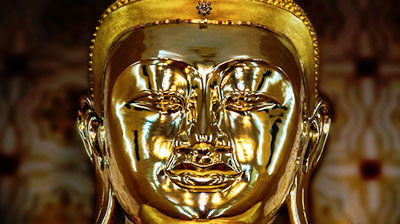
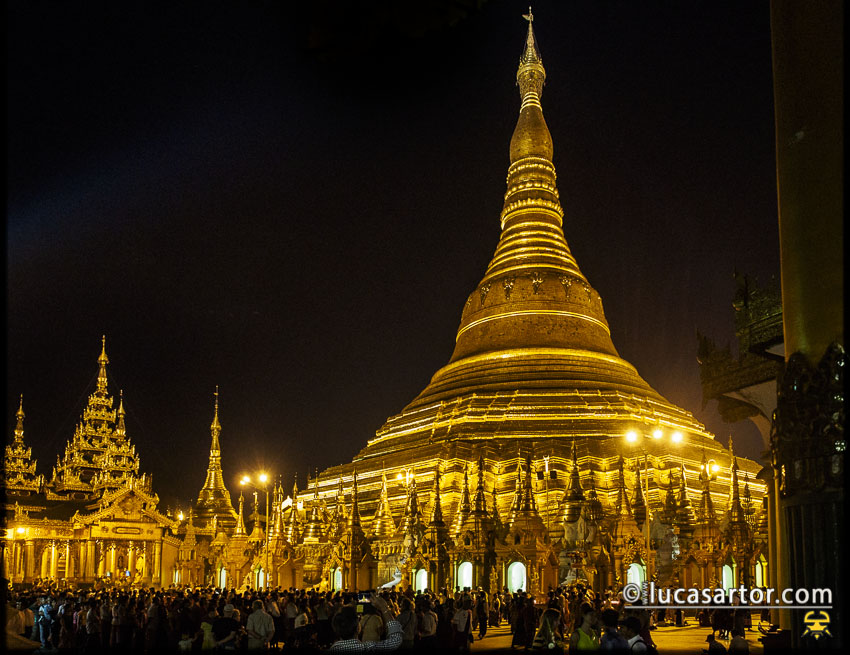
The golden soul of Yangon: Your journey will almost certainly start here. Get lost in the streets with their decadent colonial charm and stop to chat with the locals. Don’t miss the Shwedagon Pagoda, the massive and glittering spiritual heart of the country. And if you want a slice of real life, hop on the Circular Train and get off at the station that inspires you the most… something interesting is bound to happen!
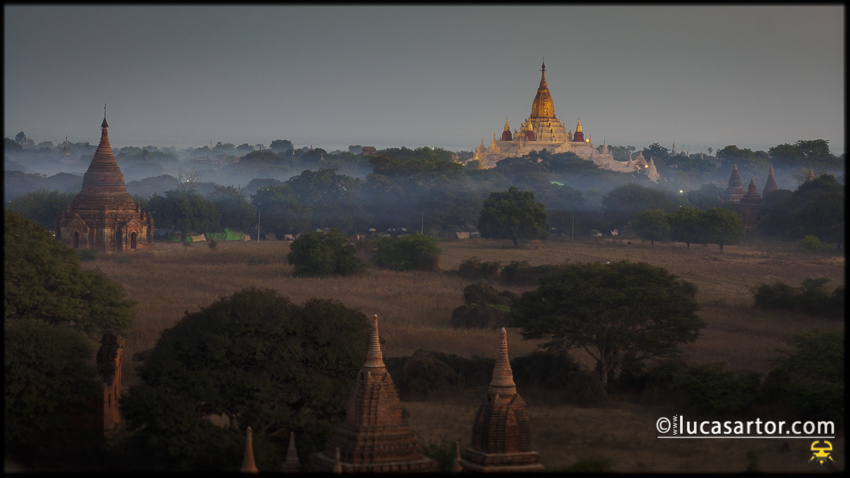
The immortal magic of Bagan: On the banks of the Irrawaddy River lies the ancient capital, with its thousands of red-brick temples, stupas, and monasteries emerging from the jungle. Watching the sunrise over the temples of Bagan is an experience that will pierce your soul (some choose to do it in a hot air balloon: an expensive but once-in-a-lifetime option).
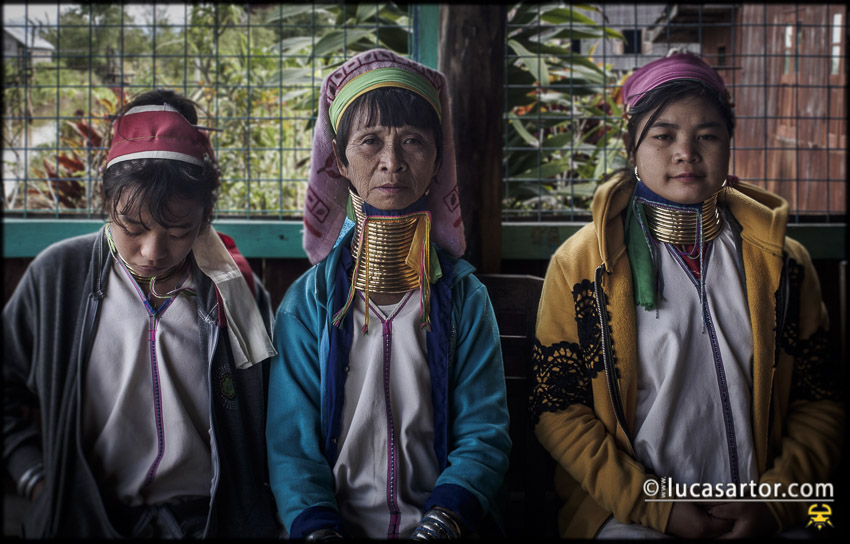
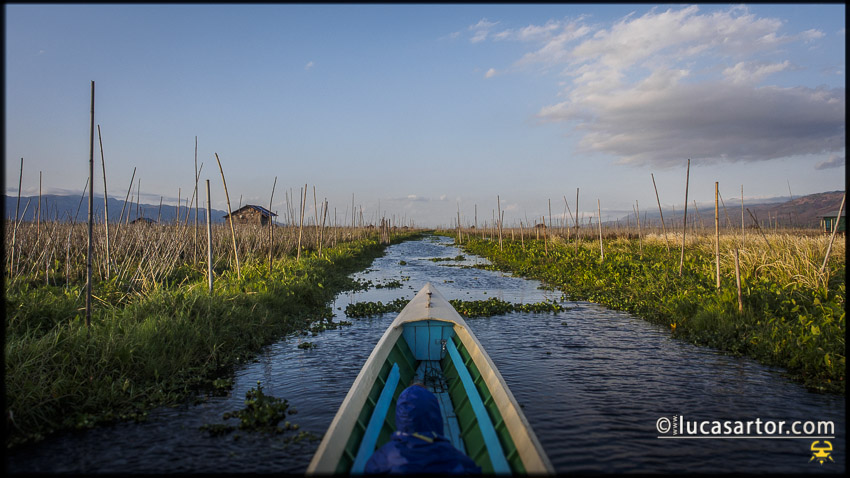
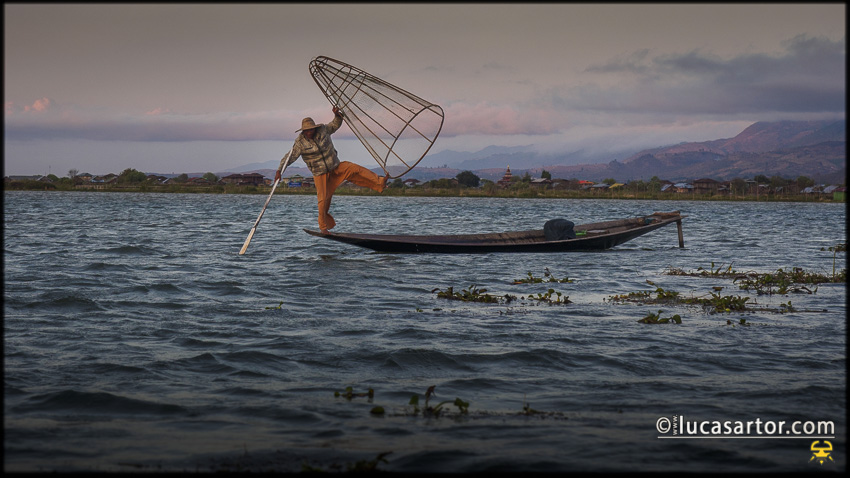
The water world of Inle Lake: At an altitude of 900 meters, surrounded by mountains, you will discover the culture of the local ethnic minorities. Here live the fishermen of the Intha ethnic group, famous for their unique style of rowing with one leg: one of the most photogenic landscapes in all of Asia. If you love walking, the 3-day trek from Kalaw to reach the lake is a splendid adventure.
The ancient capitals of Mandalay: Mandalay is second to none. Besides the city itself, explore the surroundings by getting lost among the former capitals of Amarapura and Sagaing, and walk at sunset on the wonderful U Bein Bridge, the longest teak wood bridge in the world.
Slowness on the river: Take the boat to navigate from Mandalay to Bagan. If you have the time (and patience!), choose the “slow boat,” where locals get on and off at every small village carrying goods of all kinds. It’s a long but authentic journey.
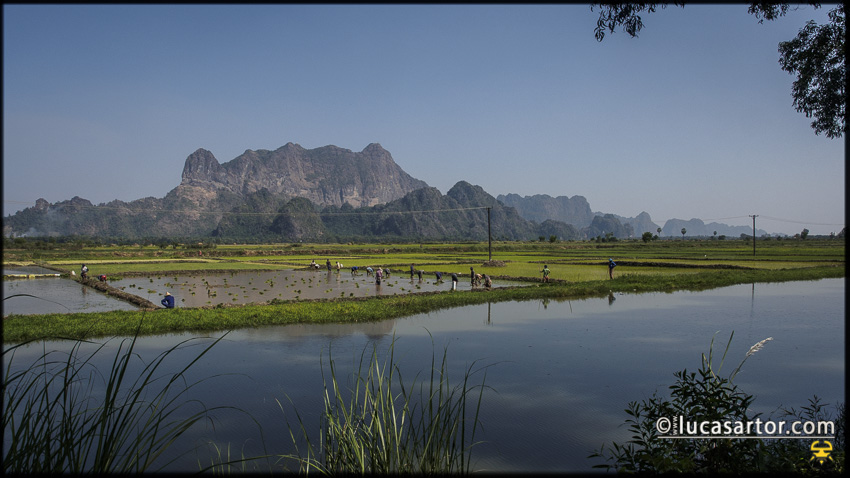
The deep South: Rent a scooter and go explore the lush countryside and karst mountains of the south, around Hpa An and Mawlamyine.
Lens always ready: Myanmar is an absolute paradise for photographers. At every corner, there is a scene of life or a portrait to capture. If for a moment it seems there is nothing interesting, just wait 5 minutes: something will surely catch your eye.
Some info about Myanmar:
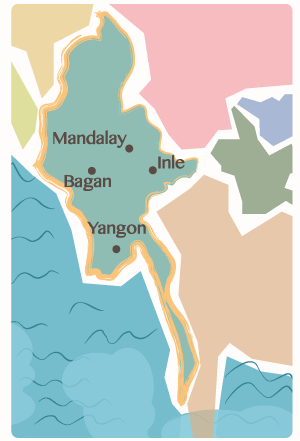
Capital of Myanmar: Naypyidaw
Population: 54.5 millions
Official language: Burmese
Currency: Kyat
Calling Code for Myanmar: +95
Visa and Security – ATTENTION (2026 Update): Obtaining an electronic visa (e-Visa via the official website evisa.moip.gov.mm) is technically possible, but tourist travel to Myanmar is currently strongly advised against due to severe internal armed conflicts. Many areas, including some of those mentioned, may be inaccessible or extremely dangerous. Your passport must have at least 6 months of validity.
Connectivity and Transport: Buying a local SIM card (like MPT) used to be very easy. Today, telecommunications and the internet are subject to heavy censorship, sudden government blocks, and frequent power blackouts. Wi-Fi in hotels exists, but it is slow and unstable.
N.B. ALWAYS strictly check the travel advisories of your Foreign Ministry before even considering a trip to Myanmar these days!
I wrote an article with more details about the destinations and what to visit during a trip to Myanmar: Myanmar: what to see!
Myanmar, when to go?
The Burmese climate is dictated by the monsoons:
The ideal season (November – February/March): This is absolutely the best time to travel. The weather is dry, and the temperatures are bearable.
The furnace (March – May): The country literally becomes scorching and arid; visiting temples in the middle of the day is almost impossible.
The rainy season (May – October): The monsoons hit hard. However, a great idea for those who don’t mind downpours is to travel between September and October: during these months, the rains start to decrease, the air becomes crystal clear, and Burma lights up in a spectacular green.
Myanmar: Visual Archive
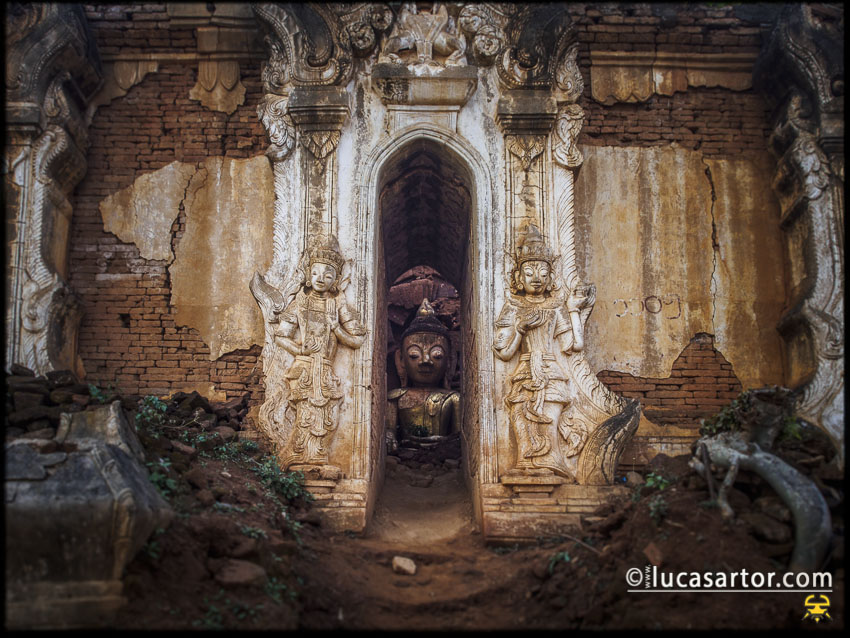
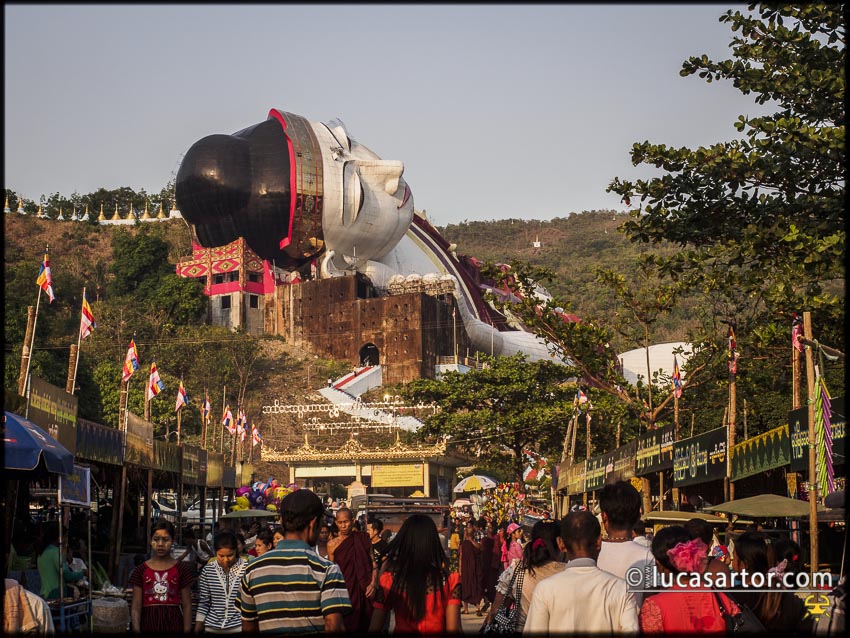
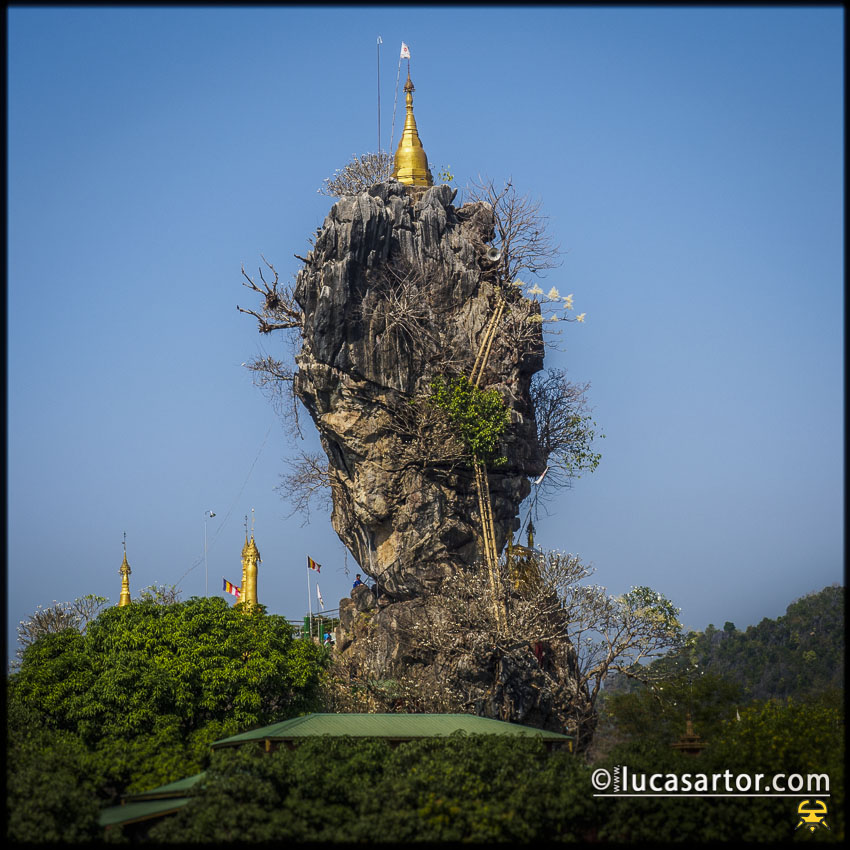
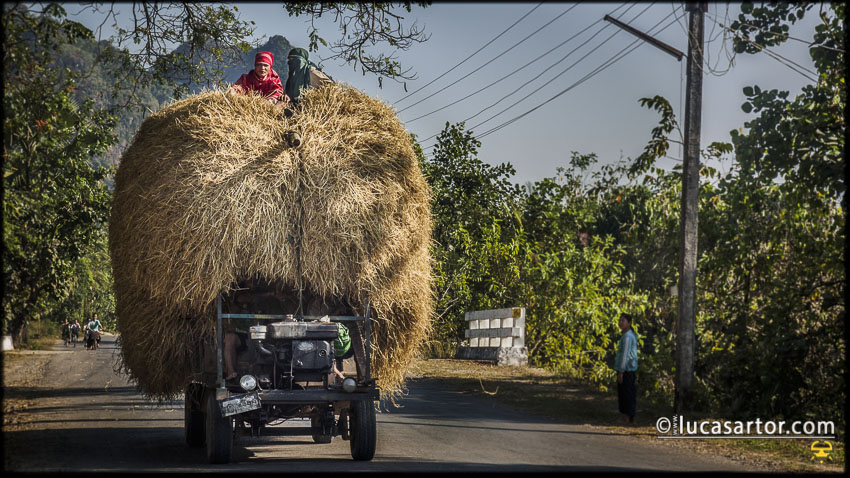
These images are a small selection from a larger archive built over years of documenting Myanmar through its landscapes, communities, food culture and the details that rarely make it into guidebooks.
If your project requires imagery or destination knowledge from a specific region, subject or visual perspective, I’d be happy to discuss how I can help.
Available for travel brands
These stories, photographs and field notes are part of a wider archive built through years of living in and experiencing Asia.
I work with travel brands, tour operators, DMCs and creative teams to develop destination narratives, research and content that go beyond standard itineraries.