It was winter again when I returned to Japan.
The biting air of Osaka brought back memories of my first trip to the country, which had begun in Fukuoka under a snowfall of slow flakes brushing against my face. I remember one evening when the streets were blanketed in silence, and the cones of yellow light from the street-lamps rested on the fallen snow, tinting the night with warm hues. A woman passed by on a bicycle, heels and skirt tucked under a heavy parka with a hood trimmed in synthetic fur. She pedaled slowly, her face flushed from the cold, a wisp of breath rising from her mouth and immediately dissolving into the air. I imagined her on her way home after a long day at the office. Or at least, that was the story I built around her.
Several years had passed since my flight from Narita. This time I wasn’t returning to Japan purely out of desire, but for bureaucracy: my South Korean visa was about to expire, and I had to leave the country to remain within the legal days granted to tourists. Osaka had stayed in my mind as a place to return to. Seoul was just a plane ride away. The city was lively enough to keep me awake at night and, at the same time, calm and relaxed. But above all, I wanted to return to an izakaya, in front of a plate of takoyaki covered with dancing katsuobushi flakes, accompanied by a chilled highball shining under the lights of the bar.
It was 2020, and the news reported that the Korean city of Daegu was locked down: no one in, no one out. My mother advised me not to travel, and I had no idea what was about to unfold in the world in the years ahead.
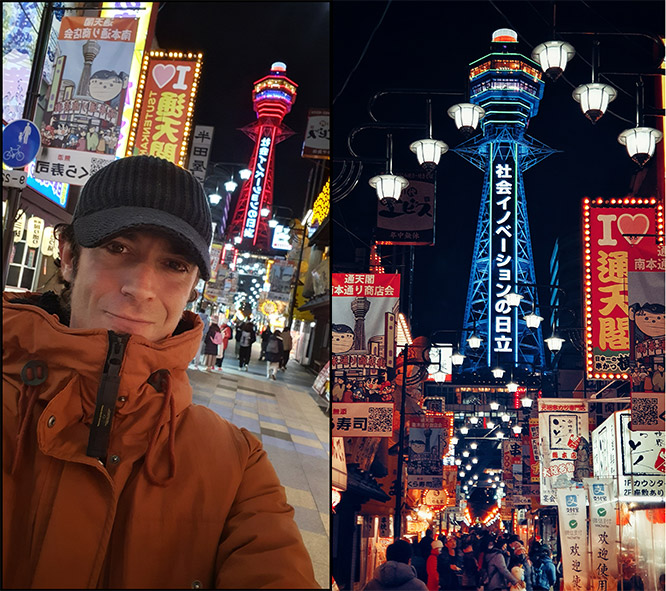
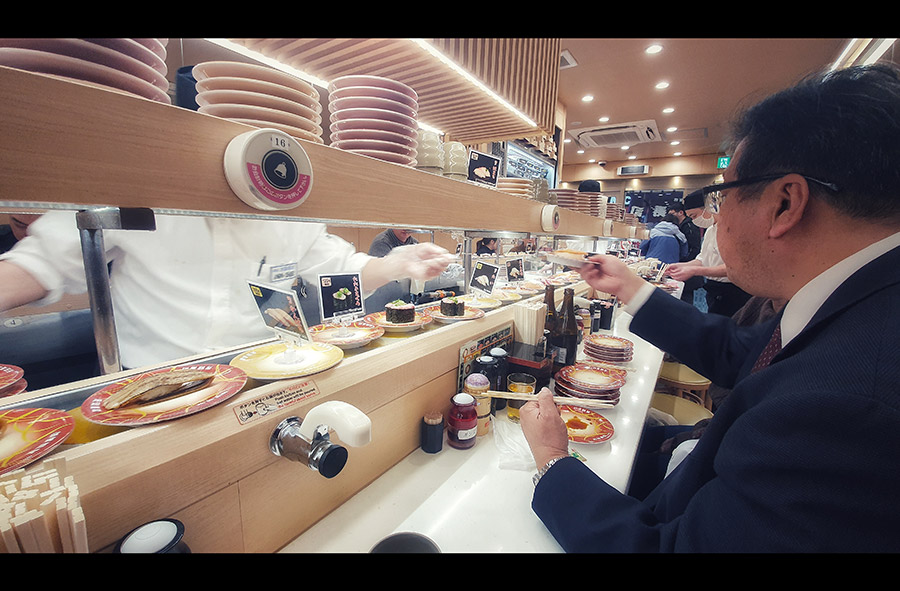
As always, I had no preset plan. By pure chance, I had ended up in Japan again when the temperatures were least forgiving. No problem for daytime explorations: searching for a true Osaka was accompanied by the gentle warmth of sunlight sufficient to keep me comfortable. Long walks with no precise destination through less prominent neighborhoods, past temples, narrow alleys, and half-open windows from which voices and the clatter of dishes escaped. Sometimes I would enter an otaku shop full of models and gadgets of every kind, collectors leaning over display cases to examine every detail before choosing the right piece to add to their collection. A little further, a sushi restaurant with colorful plates moving slowly along the conveyor, while hungry customers followed them with attentive eyes, ready to reach out at the right moment. I watched life around me: two friends deep in conversation on a bench near Yodoyabashi Station, people walking through the streets, others sitting in the parks.
In Japan, I often felt like a tourist, despite always trying not to be. I sensed a subtle distance, hard to name, as if I had bought a ticket to watch a performance, but from the last row. In Osaka, however, that feeling seemed to loosen. It didn’t disappear completely, but it softened. All it took was sitting at the counter of an izakaya, and after a few minutes, someone would nod with their glass, ask where I was from, and pull me into a conversation without a shared language.
If the day belonged to the streets, the evening demanded a refuge. The cold and the silence of lamp-lit streets discouraged lingering too long. Only a few locals wandered home after leaving restaurants or finishing late work shifts, and tourists stopped briefly to take photos near the Tsūtenkaku Tower. In one of these moments, when the sun had long set, after an Hakata ramen whose cloudy tonkotsu broth had warmed me up a little, I found myself walking past shop windows where Gundam, Mazinger, and Grendizer seemed to watch me as I passed.
Along the Dotonbori canal, the cold was unpleasant. The wind slid between the buildings and slipped into my clothes like a thin blade. A woman, bundled in a padded coat, froze her fingers while holding a sign advertising a discount at her workplace. She stayed there, beneath the neon glow of the signs, her breath rising in quick clouds as she hopped in place, trying to warm herself a little.
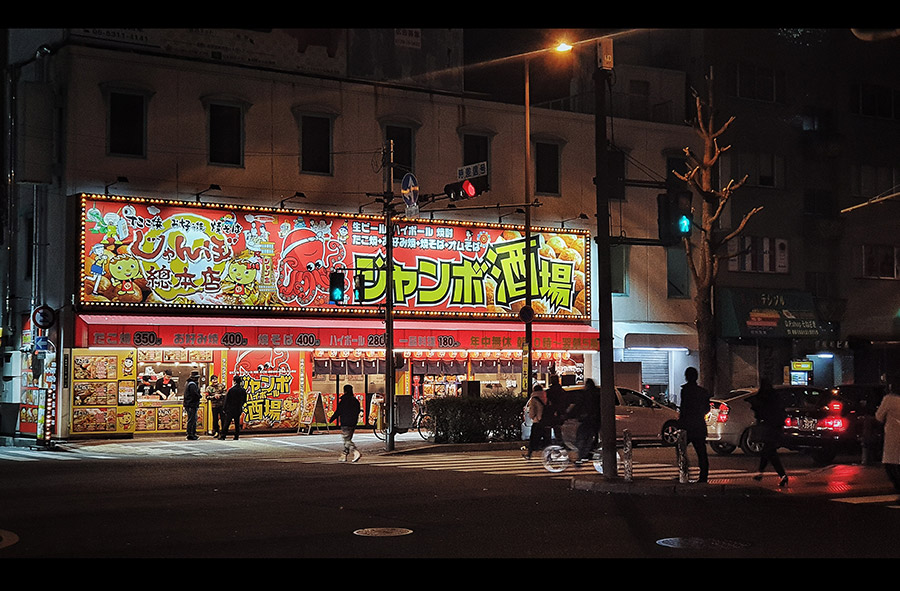
The air was a mix of grilled fish and kitchen smoke. Passersby walked quickly, shoulders raised against the cold. Occasionally, sharp, sudden laughter broke out from a group of young people walking through the narrow streets.
The clouds promised more snow. I began thinking of a warm place to spend some time. A counter, a drink, a few exchanged words before returning to the hostel.
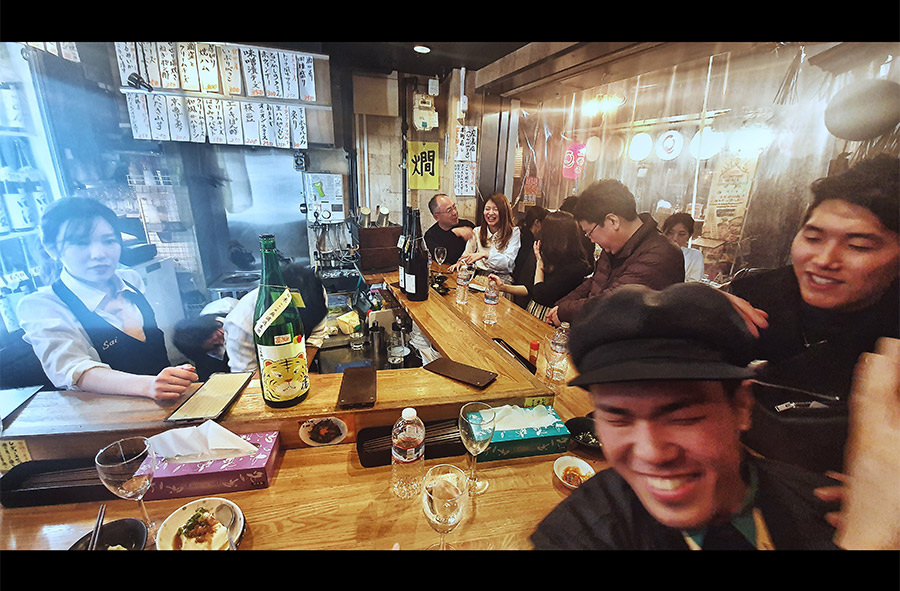
I headed to the Kuromon Ichiba market area and set out to find an izakaya serving warm sake. I passed several places until I found one perfect for me: small, with few tables, a couple of bartenders with kind smiles, not too crowded but not empty either. I love these kinds of spots, where everything revolves around the counter, between the clinking of glasses and the hum of people sharing their lives. Here, socializing stops being something to chase and takes shape naturally, effortlessly. People busy consuming beer, sake, and words, mixing stories and ideas with the warmth of the place.
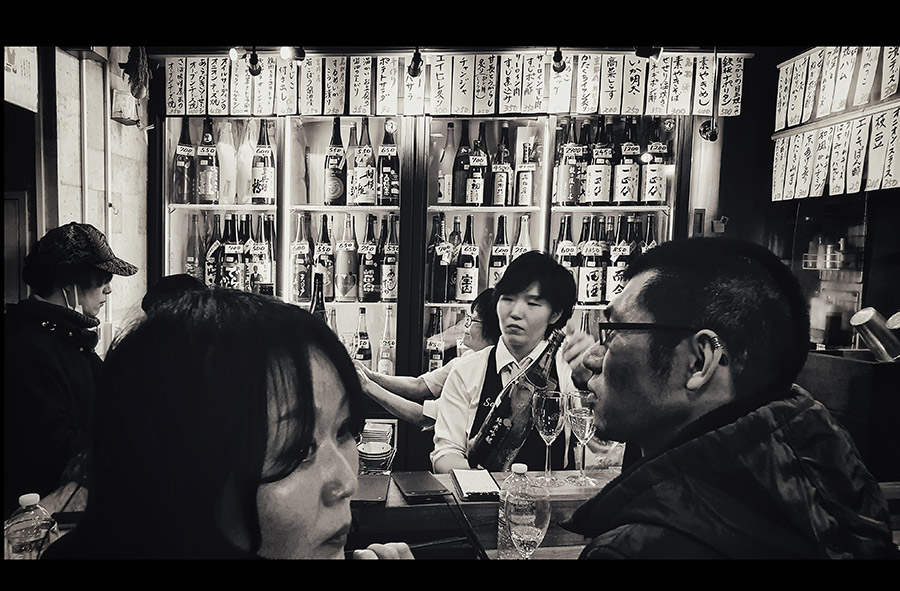
I returned to that izakaya every day until my departure. Between the warm rice-scented drink and conversations with strangers who, for a few hours, became like old friends, each evening became a small reprieve from the city’s cold. Some faces started to become familiar: two local boys coming from rehearsals of their Japanese reggae band, three girls often sitting at the same table, and an elderly gentleman from Singapore who, at one point, began buying drinks for everyone.
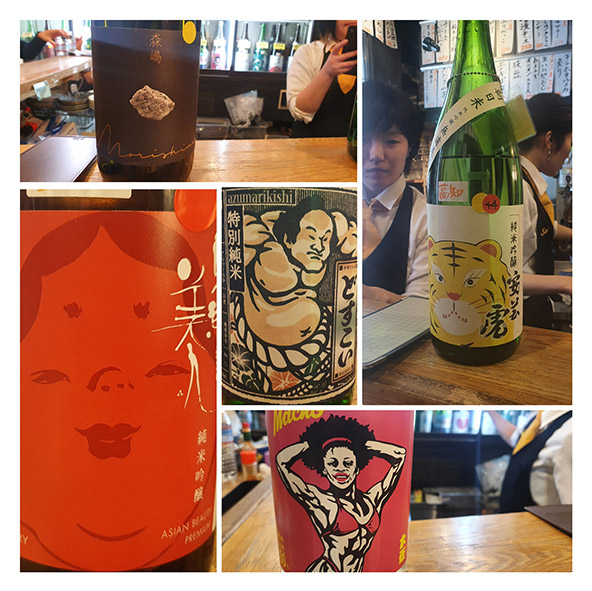
Liquid comfort brought new faces closer and made the lights of the izakaya feel more familiar. Even those who didn’t speak a word of English still involved me with a smile or a gesture, as if for a moment, my presence became part of that small local human theater.
The plane back to Seoul was one of the last still departing from Japan.
Shortly after, the world closed down, with the sharp sound of a shutter dropping suddenly, for what seemed like an endless time. In the months that followed, I often thought back to that izakaya in Osaka and the people I had met there, wondering if I would ever return.
You think the memories you’ll carry with you will be the views, the famous corners, the monuments everyone talks about. What stays with me instead is the warmth of those winter evenings, the sake, the noise, the faces that became familiar, and the feeling of having been let in.